Thursday, February 9, 2017

The Clay Brain

The Clay Brain
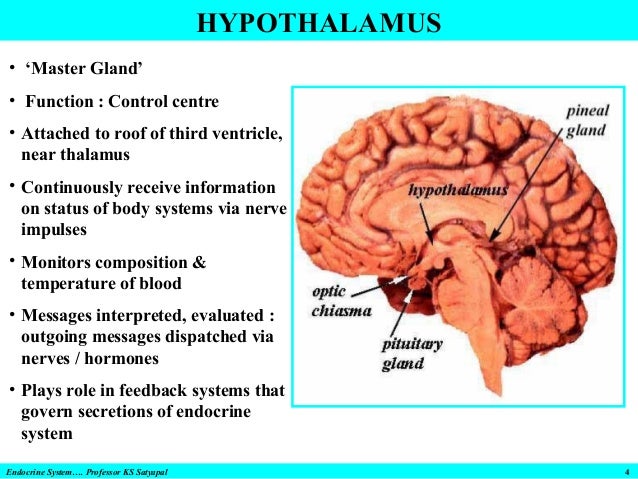
For our clay brain, we decided to outline our work with pencil first and number the different parts, for the left hemisphere looking from the sagital plane, we started with the brain stem which consists of the medulla oblongata, pons, and then the midbrain. This part of the brain controls digestion, heart rate, breathing, and sensory and motor nerves. Next came the cerebellum that controls balance and motion, and the Diencephalon; this has the thalamus, hypothalamus, and pituitary gland. The thalamus sorts data, the hypothalamus keeps body in homeostasis, and the pineal gland. Hanging off of the hypothalamus is the pituitary gland which secretes hormones when signaled. The very middle of the brain is the corpus callosum and near that is are the Basal Gangli which is a group of nuclei with the same function. 
Next we drew out the right side to show the lobes of the cortex. the first lobe is the Frontal lobe that gives us emotion and stability, then there is the parietal lobe which senses the environment, the occipital lobe which controls vision, and lastly the temporal lobe which controls language, hearing, and memory. Inside of the parietal lobe is the somatosensory cortex that control the sensors going in and the frontal lobe is the reaction  a.k.a the motor cortex that sends signals back.  Between the occipital lobe and the cerebellum is the transverse fissure, between the frontal and the parietal lobe is the central sulcus, and the postcentral and precentral gyrus is located in the front and back of the central sulcus. Between the frontal and the temporal lobe is the lateral cerebral sulcus and between the parietal and the occipital lobe is the parieto-occipital sulcus.
That is our Clay Brain!

Wednesday, February 8, 2017

A Woman with a Hole in her Brian!

A Woman with a Hole in her Brian!
In the article "The Woman with a Hole in her Brain", by Helen Thomson, a woman was admitted to a hospital in the Shandong Province after experiencing nausea and dizziness. Turns out she was missing her cerebellum; this part of the brain controls the body's motion and balance. At a young age she learned to speak later than most kids, age 6, and also was a later walker than most. Considering this, her motion most likely came from the temporal lobe or the parietal lobe because they have to do with speech and language. If those two lobes took over her motion and balance then she would be slow to function and develop in both areas, speech and motion. 

Image result for hypothalamusHypothalamus: The hypothalamus is located south of the thalamus and controls the body's homeostasis (temperature, osmosis, etc). When signals are sent through the hypothalamus, the way the body keeps its homeostasis is by the secretion of hormones. I f a person were to be missing their hypothalamus, they would not grow properly, they would have hormone imbalance and they would have a hard time keeping a normal body temperature. Certain aspects of the hypothalamus can be controlled by the brain stem such as heart rate but the other aspects such as regulation of emotional hormones could be taken over by the frontal cortex and the signals for thirst or hunger could go through the somatosensory cortex in the parietal lobe of the cerebrum cortex.

Monday, February 6, 2017

20% of Time 100% Natural

20TIME blog post #1
Natural stimulants
        20 time is where I am able to spend 20% of my time in class working on a project of my interest. My essential question, for my project, is how to heal those who have been trafficked or suffer from PTSD without the drugs that are prescribed by the government. 
        My project research will include learning about different neurotransmitters that are affected when drugs are in the system of a person. If I can figure out what natural smells or senses can trigger those same neurotransmitters for the same calm and joyous
feeling that drugs can, then the healing process will not be detrimental to the patients later in their lives. I chose this topic because my National Charity League class's senior project was to help this organization that creates backpacks for those who are rescued from being trafficked. We were told that 75% of those rescued go to drugs for comfort because they are afraid to go home; that made me think of other ways to help then and the way the brain works has always interested me so I decided to combine the two.
        I will be able to measure my progress by whether or not I've completed certain research topics. The first that I have completed is what parts of the brain the neurotransmitters associated with drugs, emotion, stress, and fear. The final research needed to be done is which drugs have similar transmitters to what natural oils, herbs, or plants and how they will be made into lotions, perfumes, candles etc. If I have spare time, I want to research the stimulants of certain colors and the effects they have on emotion and mood to hopefully add those in as well. My plan for moving forward is to follow my schedule and also get together with a lady I met from NCL who works for a natural oil company and interviewing her and having her help me put together my final product. Since she works for a natural oil company, she mentioned to me that she would like to see my final project to see if their company could so something simular. 

Wednesday, February 1, 2017

Unit 5 Relection

Unit 5 reflection
Image result for ATPThis unit was all about how the body is able to take in food, digest using enzymes, absorb, and the factors that help along the process.  To begin, our first topic was about the digestive system. This system is separated into the Alimentary canal and the accessory digestive organs. The main functions of the digestive system is to ingest, secrete, mix, digest, absorb, and defecate. Injection is anchored by the oral cavity containing the tongue that pushes food to the hard palate to create bolus and then sends down the soft palate through the pharynx (throat), and the esophagus into the stomach. the bolus is now called peristalsis. In the stomach, chemical changes, the stomach walls mash up the peristalsis by contracting, and the peristalsis is now chyme. The chyme leaves the stomach to go to the small intestine. In the small intestine the chyme goes through the duodenum, then Jejunum, and then the ileum. Most chemical digestion and absorption occurs here. 
There are accessory organs for the small intestine; the liver which produces bile for large fats, gallbladder, which stores bile for liver, and the pancreas, which produces enzymes. the enzymes used include peptidase, intestinal lipase, Maltase, sucrose, and lactose. The small intestine is lined with micro villi to increase absorption. 
Lastly the large intestine pulls out all of the water to dry out the undigested food. The large intestine is filled with bacteria to digest in small intestine and the rest that are eliminated end up in feces. Here large mounts of mucus is lubricated to help the process flow. the passage goes from the cecum to the appendix to the ascending colon, transverse colon, descending colon, to the sigmoid colon, to the rectum, and lastly the anus. 
Image result for digestive systemNext topic was the fuel metabolism; here most starch is used as energy along with parts of proteins, lipids, and vitamins. To begin, ATP is the universal energy carrier but it does not necessarily store energy, it stores the components to make a reaction to create energy. It can be generated by the oxidation of glucose, fatty acid, and amino acids. Stage one in extracting energy from food is  breaking down macromoluecules into their monomeres.  Stage 2 is turning the small molecules of monomeres into Acetyl CoA. Stage 3 is the Krebs cycle and the Electron transport chain. Now that we have gone over the energy portion here are the states of energy. The Fed State, also known as the absorption state, is when sugar is absorbed by the intestines and the pancrease releases insulin. The majority of glucose is converted into glucose but the rest is converted to triglycerides. The Fasting State is with in one hour of eating and the insulin drops while glucagon levels rise. THe glycogen is converted into glucose through glucuneogenesis, in the liver. To conserve the glucose for the brain, the body uses fats as energy and the liver converts fatty acids to Ketone Bodies by the help of Acetyl CoA. Ketosis is when there are too many ketone bodies in the blood stream. Next is the starvation state where muscles rely on adipose tissue for fuel and the fats are all depleted. Now thr body depends on the proteins for fuel. 
During exercise, the muscles rely on glycolysis for ATP creating lactic acid which  then absorbed by the liver and reconverted into glucose. This is called the Cori cycle. The liver is what stores the glucose for these incidences so that glyconeogenisis can perform. 
As stated in a previous blog, insulin signals the high glucose levels and causes storage tissue to promote fat storage while glucagon signals low glucose levels. Adrenaline and nor adrenaline increases the heart rate and activates the storage of fats and glucose into the adipose cells.  
To go off of high insulin levels, diabetes I is due to no insulin made there is no protein for insulin. Type II is when the body rejects insulin because all of the GLUT 4 transporters are trapped inside the cell. Exercise is able to increase the production of GLUT 4 to prevent diabetes. Type II comes from chronic high blood sugar levels. 
The endocrine system  includes the steroid and nonsteroid hormones, soluble and nonsoluble respectively. The endocrine system sends negative feed back when the body is not in homeostesis and there are different glands that help with the balance; pancrease regulates glucose transport and the thyroid glaand regulates metabolism. 
They lymphatic system, explained in detail in a previous blog, talks about lymph, a clear fluid, and how it flows through lymphatic vessels to send out T cells, B cells, Helper T cells and macrophages (white blood cells). The spleen carries the RBC's and the thymus holds and makes the WBC's. 
Through this unit, I have connected ideas to my health of how well I eat and the health of loved ones around me and how they are able to control diabetes or prevent it. Also my goals for this year to stay on task and get work done efficiently to be able to get sleep and hang out with friends more has been successful because I make time for my family and friends on my higher weekends and the weekends that I know I have a lot the next weekend, I stay at home to get the work done and not become the sterio-typical second semester senior. 

Wednesday, January 18, 2017

My Digestive System Lab

The Digestive System Lab
1. My "takeaways" from this lab is that the small intestine is actually the longest part of the digestive tract and can make, for me, about 80% of the alimentary canal. This makes sense because most of the nutrition absorption occurs in the small intestine along with the chemical digestion. Included, though, in the small intestine which can make it so large is the liver, gallbladder and pancreas. Towards the beginning of the alimentary canal are the smaller aspects such as the mouth and the esophagus that lead into the stomach. They each have their own quick  ways to help with the tract and they lead the food to the small intestine but the small intestine does the heavy work.  
2. My height is 1.68 meters and my digestive system is 9.449 meters long. With that comparison, my digestive system is 5.6 times longer than my height and I believe that the reason it is able to fit into our abdomen is because it is folded and compacted together. Another way it can fit inside our abdomen is by the wrapping around the other organs. 
3. My guess for how long it takes for food to go all the way through the digestive tract is 3 hours; the reasoning for this response is because athletes are told to eat every 3 hours. According to "Mayo Clinic", it takes food an average of 53 hours to pass through the body. To pass through the stomach and small intestine it takes 6-8 hours, but to pass through the large intestine it takes much longer. some factors that may influence the time is the amount of fiber that is consumed because more fiber slows down the digestive system but it cleans out our so that the canal is open. Another influence may be the amount of food a person eats because if they continuously eat, they canal may not be able to focus on the food that it istrying to digest that has already been eaten. 
4. Digestion is the breakdown of foods into the macro molecules so that later the cells are able to absorb the nutrients that has been broken down. The pancreas is the main place where enzymes are produced and secreted to help speed up the digestion process. The pancreas is located in the small intestine and the lining of the SI is covered with micro villi that help increase absorption. Digestion, though, starts in the mouth where teeth break up the food and saliva has enzymes in it that help break down the food as well. 
5. A topic that I would like to learn more about is how the protein and lipid are able to change into enough glucose to support the body. 

Monday, January 9, 2017

Semester 2 Goals

My Goals
For my goals in the second semester includes not becoming a second semester slacker senior and to really understand the way the body works with the structure of the body. My second goal is outside of anatomy class and school; my goal is to hang out with my friends and family, doing different activities with them and taking lots of pictures on the way so that I am able to take all of those memories to college with me. 

Usually on the weekends I go to all of my practices and I study because at home I have lots of siblings so I never feel the need to hang out with my friends. I snap-chat my friends but I have a large list of things to check off before I graduate high school. One of the main adventures my friends and I want to do is the escape house where people are locked in a house or room and they have to figure out a way to escape. This would not only be fun but it would also be a very different experience that would be daring and test my fear. A plan of action for this goal is to get all of my work done early or to spend more productive time on studying so that I create time to spend with friends that is stress free. 

As for my in class goal, I want to really understand how the anatomical structure of the body is able to influence the physiological functions of the body. Knowing and understanding the body will help me with my fitness too because while working out I will be able to understand what to work out and which muscles are hidden or not used as much so that I can be more balanced. Also, when I start to hurt in a certain area, I may be able to pin point which part is hurting so that I can treat it accordingly. Also within the academic standpoint of goals, I have heard stories, true or not, about students who slack off during second semester and they get rejected from the college that they have been admitted into. Because that scares me so badly knowing I have worked too hard to be second guessed, I will make all the time that I spend studying and working to my full ability. Having fun will be a major component of the year but I also will want to have fun in the classes that I take. Because the material is intriguing to me, I see no problem with avoiding second semester senior syndrome but at the same time, it is still a goal that I would like to achieve. 

Thursday, December 1, 2016

Wellness Day Write-Up

Wellness Day Write-up; Warming-Up and Cooling Down
Shreya and I chose this topic because we both play sports and have always been told the importance of stretching and warm up with a cooldown, but we have never truly known why. Why is it more important to stretch after a workout and do more dynamic stretching before a workout? That was the main address of our Wellness day so that we were able to research the topic to inform ourselves and also the share our newly profound knowledge with the rest of the class. Since my three sports are different mechanically, I was interested in how to warm-up the efficiently for each sport. When figuring out the topic we wanted to share, we did not want to pick a topic we were clueless about, but we also wanted to do research that would benefit our knowledge as well, and the perfect medium was warming- up.
The most interesting aspects of the information that we researched were the effect on the actual warming up. How the increase in body temperature dissociates oxygen from haemoglobin to myoglobin which makes it easier for lungs to gather oxygen because myoglobin has a low affinity for oxygen, lowers the activation rate of metabolic chemical reactions, increases muscle blood flow, reduction of muscle viscosity or thickness, increase in sensitivity nerve receptors, increase of nerve impulses. Connecting the macro and micro aspects of warming-up now gives me more reason to warm up sufficiently before workouts and not skip them to save time.  The other interesting aspect was how there are many different ways in which people can warm up and the uses that the different stretches have on the body are fascinating. Knowing that there are four different types of stretching, ballistic, static, dynamic, and proprioceptive neuromuscular facilitation, now has me focus, while stretching, on which ones are most important for my work out and also have I performed all of them so that my muscles are prepared for anything and everything.
Warming up and cooling down is important to a person's health and wellness because it prevents injuries and or it heals injuries when a body part is currently damaged in any way. Some of the benefits mentioned in the presentation that I found fascinating was that stretching, dynamic and static, can help a person's posture and balance that can help in later years when our bodies are not as strong anymore. The other connection that I made was that static stretching is closely related to yoga but is in a less uniform environment. That said, static stretching is a great stress reliever and also,dynamic stretching can control and prepare an athlete's mindset for the sport. Coming out of this wellness presentation, I was astounded by the mental and physical benefits of warming up and cooling down, and the impacts that it can have on a person’s performance of that activity. Also warming up not only the parts that are used but the others so that the body becomes more balanced.
I would give us a big 10 because we put a lot of work into the presentation and we wanted to share our knowledge through the activity.